Fresh Air Isn't a Luxury: Putting Ventilation on the Window Quote
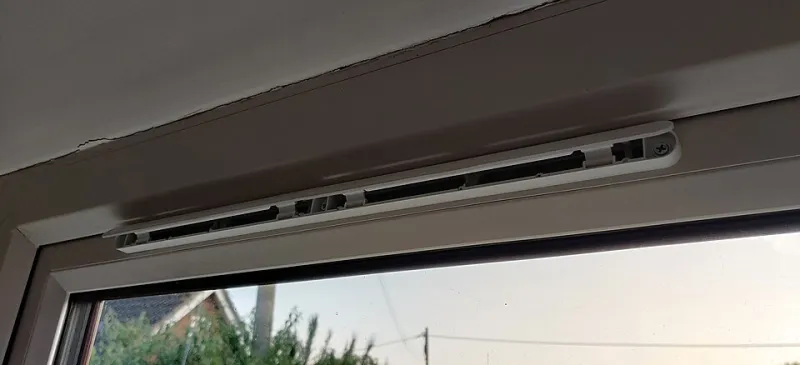
Photo: JamesKingdom, CC BY-SA 4.0, via Wikimedia Commons
Energy efficiency gets all the applause. Ventilation gets a line in the small print, if it gets one at all. That is a problem, because a window that keeps heat in and air out can also keep moisture in. In a busy UK home, that can mean misted glass, damp corners and a room that feels stuffy even when the heating is off.
When airtight becomes airless
Older windows were often draughty. That was bad for bills, but it did provide incidental ventilation. Modern windows are designed to seal tightly, with gaskets, multi-point locks and insulated frames. That is a genuine improvement. It also means the only air changes in a room may be the ones you deliberately create.
Cooking, showering, drying laundry and even breathing add moisture to the air. If that moisture has nowhere to go, it condenses on the coldest surfaces. Sometimes that is the glass. Sometimes it is a wall corner, a windowsill or the back of a wardrobe. A new window can make an existing ventilation problem more obvious without being the cause of it.
Three ways air moves
Background ventilation is the low-level, controllable airflow provided by trickle vents or other background vents. Purge ventilation is the quick burst you get by opening a window wide. Mechanical ventilation includes extract fans and, in more comprehensive setups, mechanical ventilation with heat recovery.
These are not rival technologies. They do different jobs. A trickle vent is not a hole in the window's performance; it is part of a ventilation strategy. Purge ventilation is useful for clearing steam after a shower, but it is not much help on a cold, windy night when you want the window closed. Mechanical extract is excellent in bathrooms and kitchens, provided it is installed and maintained properly.
What UK rules expect
In England, Approved Document F sets out ventilation expectations, and it was updated in 2022. Scotland, Wales and Northern Ireland have their own building regulation routes. The detail varies, but the principle is consistent: replacement windows should not leave a home less ventilated than before.
That does not mean every window must have a trickle vent in every situation. It does mean the installer should consider the property, the room and the existing ventilation rather than simply swapping like for like. If a quote treats ventilation as an optional extra, ask why.
Glazing and airflow are not rivals
It is easy to focus on the glass and forget the opening. A fixed pane may offer excellent thermal performance, but it cannot provide purge ventilation. A tilt-and-turn window may open in two ways, which is useful, but it still needs to suit the room and the way you live. Acoustic glazing may reduce traffic noise, while a trickle vent can let some of that noise back in. Solar-control glass may reduce overheating, but it is not a substitute for air movement.
The aim is a comfortable home, not just a low U-value. A thermally efficient window paired with poor ventilation can still leave you with condensation and stale air.
Questions to ask before signing
- Will you carry out a ventilation assessment for the rooms being changed?
- Are trickle vents included, and where will they be positioned?
- Will the vents affect the acoustic or thermal performance of the window?
- How am I expected to purge the room quickly after cooking or showering?
- Are the extract fans working, and are they ducted properly?
- What condensation should I expect, and when should I be concerned?
- Does the quote include any remedial ventilation work, or is that separate?
- What maintenance do the vents and fans need?
The healthy-home line item
A window quote should be about more than frames and glass. It should show how the room will stay warm, dry and fresh. Ask for ventilation to be priced and explained, not assumed. Energy efficiency is worth having, but not at the cost of a healthy home.