The View Tax: What Your Window Frame Quietly Costs You
Walk into any showroom and you'll find windows that measure identically across the outside. One feels airy, almost like a framed picture. The other feels tight, as if you're peering through a letterbox. The difference isn't the size of the hole in your wall. It's the sightline — the clear opening you actually see through once the frame has taken its share.
What sightline really means
Sightline is the visible glass area measured from the inside, at the height your eyes actually sit. It's not the same as the structural opening, and it's rarely the number printed in big type on a brochure. It's what's left after you subtract the frame face, the sash stiles, any mullions or transoms, the glazing beads, trickle vents and the occasional chunky handle.
That's why a 1200mm-wide window from one maker can feel generous while a 1200mm window from another feels mean. The outer tape measure says they're twins. The sightline says they're distant cousins.
The view tax, in numbers you can compare
Think of the frame as a tax on your view. Every millimetre of profile is a millimetre of glass you don't get. You can turn that into a simple ratio: visible glass width divided by overall frame width, and the same for height. It won't tell you everything, but it gives you a fair way to compare two windows that look alike on the shop floor.
Take a single fixed light with a slim 70mm frame face. The visible glass is roughly the overall width minus 140mm. Add a central mullion for a two-pane casement and you lose another 80–100mm down the middle. Suddenly a window that looked substantial on the plans has a noticeably narrower view. Multiply that across a whole room and the difference is not academic — it's the difference between feeling connected to the garden and feeling like you're watching it through a slot.
Measure at eye level, not on the plan
Plans are drawn from the outside. Your eyes live on the inside. Stand about a metre and a half back from the sample and crouch or raise the tape to roughly 1.5m — seated eye height for most of us. Measure the clear glass from jamb face to jamb face. Then measure how far the frame sits proud into the room. A deep frame that projects into the reveal can shrink the view even when the glass area is technically fine.
If you're comparing at home, run the same test on your existing windows. You may find the room you thought was gloomy isn't short of glass at all — it's just carrying a heavy frame.
The showroom tricks that separate lookalikes
Bring a tape measure. It sounds obvious, but most people don't. Stand at the same distance from each sample and compare the glass-to-frame ratio rather than the outer dimensions. Ask for the elevation drawing or technical schedule and look for the daylight opening — sometimes called the sightline dimension. If the salesperson can't produce it, that tells you something too.
Look closely at the corners. Slim profiles often rely on welded or mechanically jointed corners, and the way those joints are finished affects both strength and appearance. A chamfered or weathered edge can eat into the sightline more than the headline frame width suggests. Also check whether the opening sashes have equal stiles. Some designs hide a wider stile behind a dummy sash, which looks symmetrical from outside but steals view from inside.
Where frames earn their width
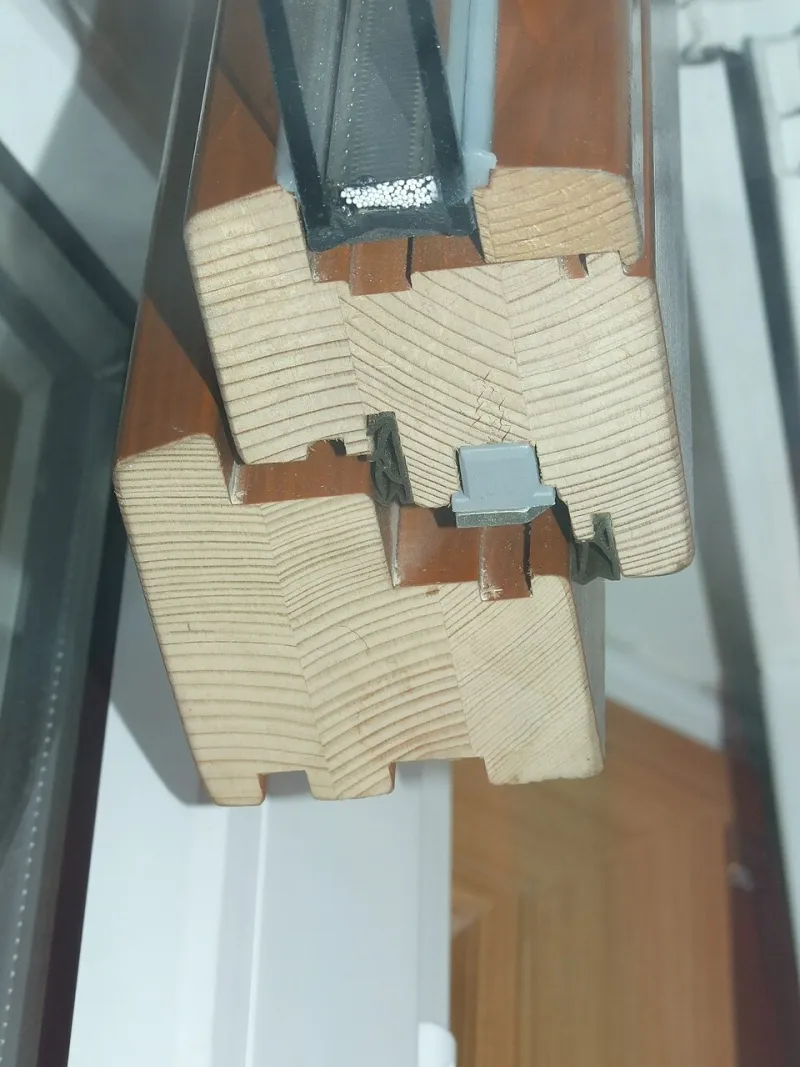
Slim isn't automatically superior. Frame width buys you strength, security and thermal performance. A PAS 24-rated window with reinforced profiles and multi-point locking is doing serious work, and some of that work shows up as profile depth. Aluminium can be slimmer than uPVC for the same span, but it conducts heat more readily, so thermal breaks matter. Timber can be beautifully slim, but it needs looking after.
Glass performance is the other half of the equation. A larger glass area means more solar gain in summer and more heat loss in winter, so a bigger view puts more pressure on the glazing specification. Check the whole-window U-value, not just the centre-pane figure. If you're in a conservation area or a period property, planning may also dictate glazing bars, frame widths and even the colour — and those rules can cost you sightline whether you like it or not.
Opening sashes and the disappearing view
Fixed lights give the clearest view because there's no sash stile in the way. Casements, tilt-and-turns and sliding sashes all carry extra vertical members. A common compromise is a wide fixed pane in the middle with narrower opening lights either side — you keep ventilation and emergency escape where you need it while the best part of the view stays unobstructed.
Then there are the small thieves: trickle vents in the head, protruding handles, deep glazing beads. If ventilation matters, ask about through-frame vents or wall-mounted alternatives that don't eat into the glass line.
A five-minute test before you commit
Measure your existing window. Then use masking tape to mark out how much glass you'd lose if the frame were 20mm wider all round, or if a central mullion were added. Live with it for an evening. It's a crude mock-up, but it's surprisingly effective at showing whether the view matters more than the extra security or the heritage look.
Finally, prioritise by room. The living room and kitchen usually deserve the clearest sightlines. A bathroom or landing can afford a chunkier frame if it buys you privacy, ventilation or a better price. Comparing windows well isn't about finding the slimmest frame on the market — it's about knowing what you're trading and deciding whether the view is worth it.