The Weakest Link: Judging Window Security Beyond the Lock Badge

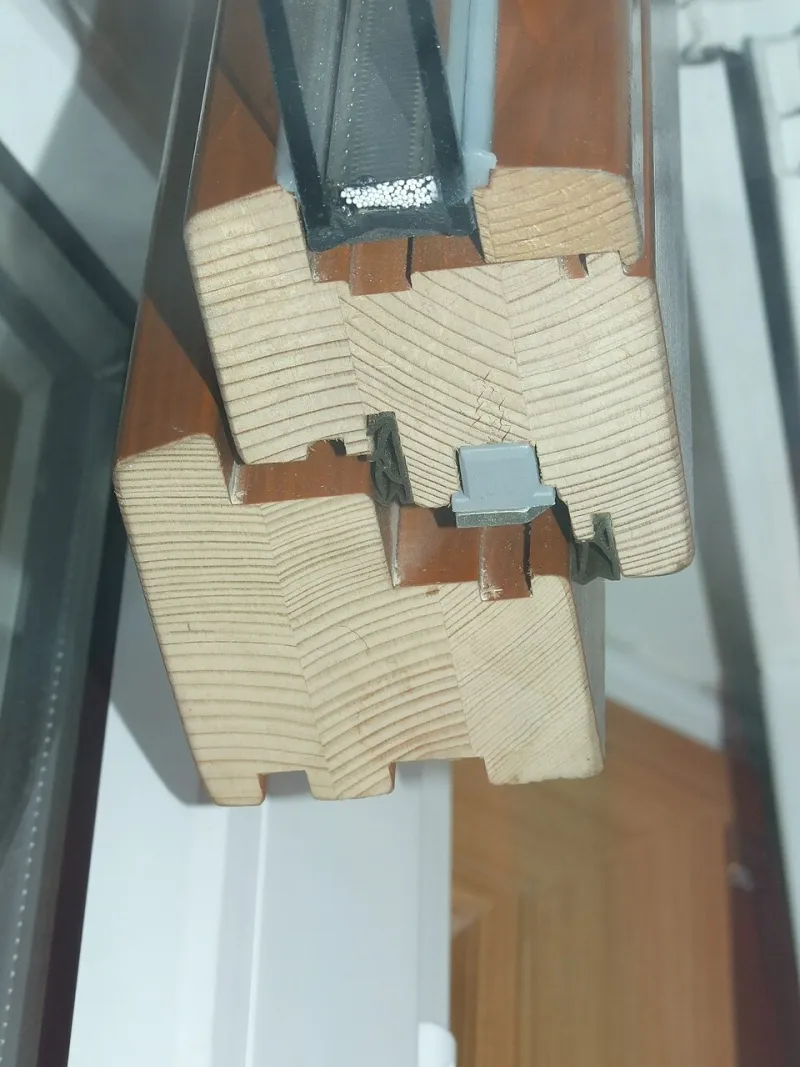
Photo: André Karwath aka Aka, CC BY-SA 2.5, via Wikimedia Commons
Most window quotes have a little line buried in them: "multi-point locking" or "PAS 24 accredited". It's reassuring, and it's also where a lot of homeowners stop reading. Fair enough — unless you've spent time thinking about how break-ins actually happen, it's hard to know what else you'd even look for.
So here's the shift in perspective worth making. A burglar isn't assessing your lock. They're assessing the whole window: how solid it feels, how much noise it'll make, how long it'll take, and how exposed they are while they're doing it. Security is a chain, and the lock is one link — often not even the weakest one.
A lock is only as strong as the thing it's bolted to
A good multi-point lock throws several hooks and bolts into the frame at once, which is genuinely better than a single latch. But those bolts are only holding if the frame resists being prised. On a flimsy profile with thin walls, a determined lever can distort the frame itself and the locking points come with it.
When you're comparing systems, ask what's inside the profile. Quality UPVC frames use chambers reinforced with steel or aluminium — not just at the corners, but along the full length of the sash and outer frame where the locking points sit. Composite and timber frames have their own logic, but the question is the same: what is the lock actually gripping?
Also worth a look: how the frame is welded or mechanically jointed at the corners. Neat, tight welds aren't just cosmetic. Corners are where prying forces concentrate.
Glass is usually the easiest way in, so ask what's in it
If someone is going to get through your window quickly, they'll go through the glass — not the lock. This is why the glazing spec deserves as much attention as the hardware.
- Toughened glass breaks into small blunt-ish chunks. It's safe and it's standard in many locations, but it offers limited resistance once it goes.
- Laminated glass holds together on a plastic interlayer when it breaks. It takes repeated effort to get through, and it's noticeably quieter to break — both useful.
- Laminated security glass rated to a recognised standard (BS EN 356 classes such as P1A, P2A and upwards) is the version to ask about if security is a priority.
A sensible, proportionate approach for most UK homes: laminated or laminated-security glass on ground-floor windows and any easily reachable first-floor windows above flat roofs, extensions or bin stores. Upper floors with nothing to climb on don't need the same treatment, and spending there often means spending less elsewhere.
Hardware has to survive twenty years, not twenty minutes
Showroom windows feel wonderful. They've been opened twice. The real test is what happens after a few thousand cycles, a decade of British weather and a household that slams things.
Things worth checking when you're comparing:
- Hinges — are they load-rated for the sash size, and can they be adjusted as the window settles?
- Handles — a flimsy handle isn't just annoying; if it wobbles or the spindle wears, the locking mechanism stops engaging properly.
- Espagnolette bars and shoot bolts — do the locking points run the full height of the sash, or just the middle?
- Restricted opening — night-vent or restrictor positions are great for ventilation, but check they're robust and that they don't compromise the fire-escape function covered below.
- Coastal and exposed sites — salt and driven rain eat cheap hardware. If you're near the sea or up on a hill, ask specifically about corrosion-resistant finishes.
The installation is half the security
This is the part nobody puts on a brochure. A premium window fitted badly is less secure than a mid-range window fitted properly.
The frame needs to be square, packed correctly and sealed to the reveal so there's no gap to work at. Silicone and foam should be continuous, not dotted about. Fixings should go into something structural — not just into plasterboard or a crumbling lintel. And the window should sit in the wall with its drainage and ventilation details intact.
It's worth asking installers how they seal around the frame and what they do if the reveal is out of square. Vague answers are informative.
Certificates: make sure they cover the whole window
PAS 24 is the standard you'll see most often in the UK, and the current version is PAS 24:2022. Crucially, it's a test of a complete window assembly — frame, glass, hardware, the lot — not a badge you can stick on a lock. Secured by Design is a police-backed scheme that goes further, and you may also come across EN 1627 ratings (RC2 and similar) on European systems.
Ask for the certificate and check that the description matches what you're buying. A certificate for a different profile, a different glazing build or a different handle set isn't your window.
Insurance small print and the fire-escape trade-off
Two practical constraints sit either side of your security choices, and they occasionally pull in opposite directions.
Insurance. Many policies specify that ground-floor windows must have key-operated locks, and some ask for particular standards on doors. Check your policy wording before you order, not after — it's far easier to specify the right thing up front than to argue about a claim later.
Fire escape. In habitable rooms above ground floor, escape windows normally need to open fully and give a clear opening — broadly around 450mm wide and 750mm high, with the bottom of the opening no more than about 1100mm from the floor, per Approved Document B guidance. That means egress hinges and a handle that actually opens the sash wide, not a restrictor that only gives you a hand's width. If security is a worry in those rooms, the answer is usually better glass and better locking on the frame — not blocking the escape route.
If any of this applies to your home, raise it early. Good installers deal with it routinely and will tell you where the line sits.
Six questions to put in writing
- What is the frame reinforced with, and where?
- What glass specification is quoted, including any security laminate class?
- Is the PAS 24 certificate for this exact window build?
- Which locking points engage, and how many?
- How do you seal and fix the frame into the reveal?
- Does the fire-escape opening meet Approved Document B, and how is it hinged?
After the fit: a five-minute habit
Security equipment degrades quietly. Once a year, run a cloth with a little silicone lubricant over the locking points and hinges, check the handle screws, and make sure every window still closes and locks with a clean, firm action rather than a shove. Keep keys out of locks and out of sight. It sounds trivial, but a window that locks properly is doing more for you than any badge on a quote.
Compare the assembly, not the bullet point. That's where the real difference lives.