The Line-by-Line Habit: How to Compare UK Window Quotes Without Losing the Plot
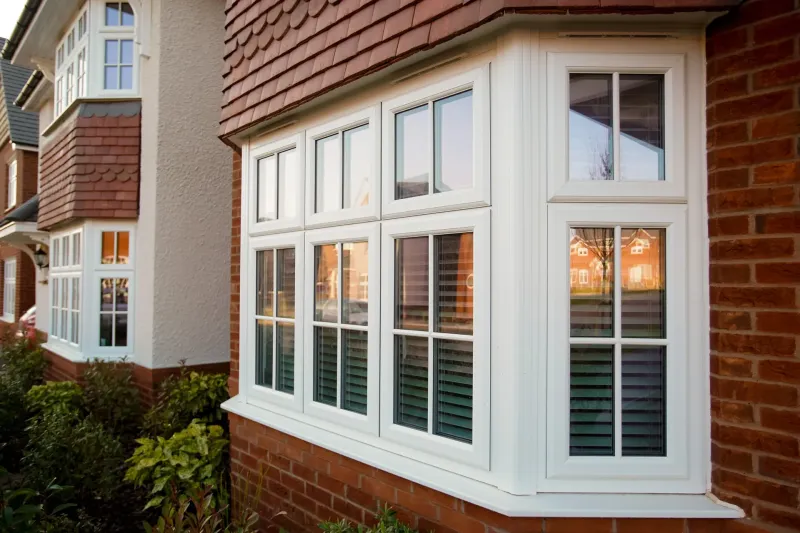
Photo: window installation quote paperwork and samples on a UK kitchen table, via cdn.prod.website-files.com
Most window quotes arrive looking tidy. One number at the bottom, a few product names, maybe a glossy brochure attached. The trouble is that two quotes can land within £200 of each other and still describe completely different windows. One might include warm-edge spacers, airtight tape and a ten-year insurance-backed guarantee; the other might be a fairly ordinary frame with a centre-pane U-value dressed up as the headline figure.
If you want to compare like for like, stop reading the total first. Read the specification. Here is how to do it without needing a physics degree.
Start with the frame, not the bottom line
Ask for the exact frame system, not just the material. 'uPVC' and 'aluminium' are categories, not specifications. A good quote should name the profile, the number of chambers, any reinforcement, the finish, the colour, and the hardware. For aluminium, ask about thermal breaks. For timber, ask about the treatment and the species. For composite, ask what the core is made from.
This matters because a 70mm frame and an 80mm frame are not automatically better or worse than each other. What matters is how the whole window is put together. At Clearvue, we would rather see a well-detailed mid-range frame than a premium name with vague glazing and a rushed installation.
The glazing make-up is where quotes go to hide
'A-rated glazing' is not a full specification. Ask for the make-up in writing: glass thickness, Low-E coating, cavity width, gas fill, spacer type and any laminated or acoustic pane. Something like '4mm Low-E / 20mm argon / 4mm clear' tells you far more than 'energy-efficient double glazing'.
Warm-edge spacers are a small line item with a real job. They reduce heat loss at the edge of the glass, where condensation likes to gather. If one quote includes them and another quietly leaves them out, the totals are not comparable.
Also ask whether the U-value quoted is for the whole window or just the centre pane. Centre-pane figures always look better because they ignore the frame and the edge. For a fair comparison, you want the whole-window U-value, usually shown in W/m²K.
U-values: one number, several meanings
A whole-window U-value is the one to put side by side. It tells you how much heat the complete window is likely to lose. The lower the number, the better the thermal performance—but only if the rest of the specification supports it.
Do not be shy about asking for the certificate or test evidence behind the figure. A quote that says '0.8' with no supporting detail is a claim, not a comparison point. A quote that says 'whole-window U-value 1.2 W/m²K, certificate available' is something you can actually weigh up.
Trickle vents, ventilation and the bits nobody photographs
Ventilation is easy to overlook because it is not glamorous. But trickle vents, background ventilators and glazing with restricted openings all affect comfort, condensation and building regulations. Ask whether trickle vents are included, how many, and whether they are acoustic or standard. If they are listed as an extra, add them to the total before you compare.
Installation method: where the specification meets your wall
A brilliant window fitted badly is a bad window. The installation line should tell you how the old frames will come out, how the new ones will be fixed, how the gap will be sealed, and who is making good inside and out. Look for airtight tape, foam, packers, cills, cavity closers and plaster repairs.
Ask about scaffolding, waste removal, building regulations notification and whether the fitters are employed or subcontracted. None of this is exciting, but it is exactly where a cheap quote can become an expensive job.
Guarantees and hidden extras
Compare the guarantee in three parts: product, installation and glass. A ten-year product guarantee is not much use if the installation is covered for only one year. Ask whether the guarantee is insurance-backed and transferable if you sell the house.
Then hunt for extras: colour-matched trims, handles, restrictors, fire-escape hinges, cill upgrades, VAT, disposal of old windows, and any charge for a survey. A quote that excludes several of these is not necessarily dishonest—it is just not the final price yet.
A simple scoring method that keeps you honest
Give each quote a mark out of five for these categories: frame specification, glazing make-up, whole-window U-value, ventilation, installation method, guarantees, hidden extras and aftercare. Then weight the three categories that matter most to you. If noise is your main worry, glazing and installation deserve more weight. If summer heat is your concern, glazing and ventilation move up the list.
Add the scores up, but keep the raw notes beside them. A quote that scores well on paper but cannot answer a basic question about warm-edge spacers is not automatically the winner. The scoring method is there to slow you down, not to replace your judgement.
Questions to send before you sign
What is the exact frame system? What is the full glazing make-up? Is the U-value whole-window or centre-pane? Are warm-edge spacers included? How many trickle vents, and what type? What is the installation method and who does the making good? What does the guarantee cover, and is it insurance-backed? What is excluded from the price?
If a company answers those clearly, you are already in a better position than most buyers. If they dodge them, you have learned something useful before the deposit leaves your account.