Your Brickwork Is the Real Judge: Comparing Window Samples at Home

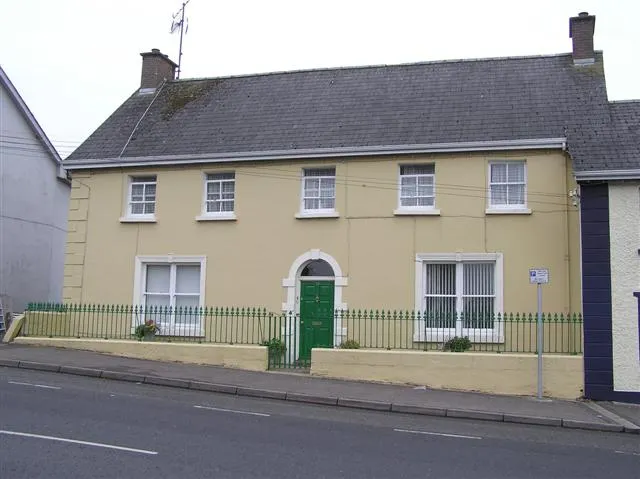
Photo: Roman Eisele, CC BY-SA 4.0, via Wikimedia Commons
Showrooms are brilliant at one thing: making windows look expensive in the best possible way. The lighting is generous, the walls are clean, and the sample sits at eye level with nothing competing for attention. That is not a criticism. It is a shop. But it does mean the version of a window you fall for on a Saturday afternoon is not necessarily the version that will turn up on your elevation in February.
The display has a job to do
Walk into most window showrooms and you are standing in a controlled environment. Spotlights pick out the grain of a composite frame. Cool white walls make grey and anthracite finishes look sharper. The glass is spotless, the samples are oversized, and there is no clutter, no radiator, no houseplant and no neighbour's wheelie bin in the background. None of this is dishonest, but it is controlled.
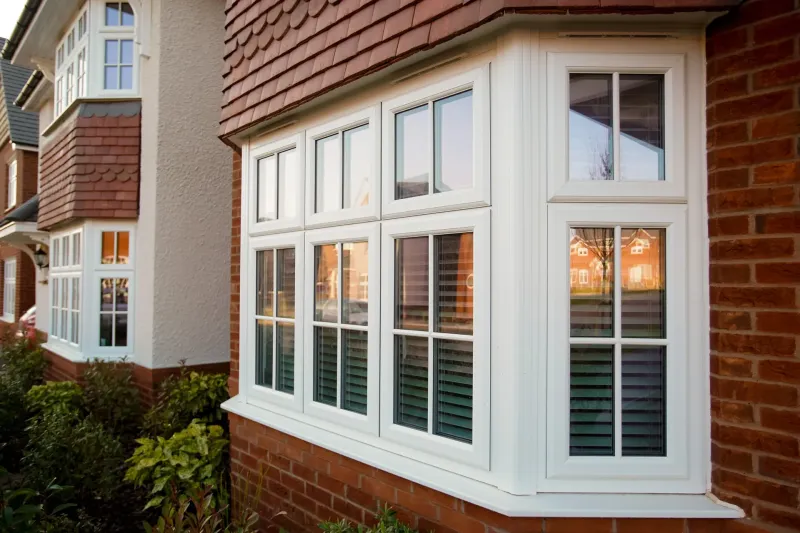
That matters because windows are not viewed in isolation. They are viewed against brick, render, stone, roof tiles, paving and whatever colour you painted the hallway. A frame that looks crisp against a showroom display board can look creamy, chalky or surprisingly dark once it is fitted into a real wall.
Your house is the uncontrolled test
A north-facing room does not get the same light as a south-facing one. A red-brick Victorian terrace does not set off a window in the same way as a white-rendered new build. Interior colours matter too: a warm off-white wall can make a cool white frame look clinical, while a dark grey frame can disappear against dark cladding or look heavy against pale stone.
The glass changes as well. Low-e coatings, solar-control layers and different cavity widths can alter how a window reflects the sky, the garden and the street. In a showroom, you mostly see the display behind you. At home, you see clouds, trees and the house opposite.
Take the sample for a walk
Ask whether you can borrow a sample, or whether a returnable sample can be ordered. Then use it properly. Hold it against the outside wall, next to the actual opening, and look at it from the pavement as well as from the doorstep. Take it inside and prop it against the reveal. View it in the morning, in the afternoon, on an overcast day and under artificial light.
Compare the frame colour with the mortar, the cill and the surrounding brickwork. Check how the sample looks beside your flooring and kitchen cabinets, not just beside a paint chart. If a full sample is not possible, ask for close-up photographs of the exact finish on a similar property. A generic brochure image is not the same thing.
Read the quote like a sceptic
A good quote should talk about your house, not just the product range. These questions help separate real-world performance from showroom polish:
- Is the sample the exact finish, glazing specification and spacer bar I would receive?
- What is the whole-window U-value for my size and style, rather than just the glass centre-pane figure?
- Which low-e coating is being used, and how will it affect daylight and solar gain in this room?
- Are trickle vents included, and will they change the look or acoustics of the frame?
- What installation details are included, such as making good, trims, cills and disposal?
- Can I see or speak to a local customer with a similar property?
- What happens if the colour or finish looks different in situ?
The confidence test
Confidence does not come from a polished display. It comes from seeing the product in your own light, against your own walls, and getting answers that mention your house rather than the showroom. A window can be technically excellent and still be the wrong choice for your elevation. The sample is only the start; the setting is the real judge.